
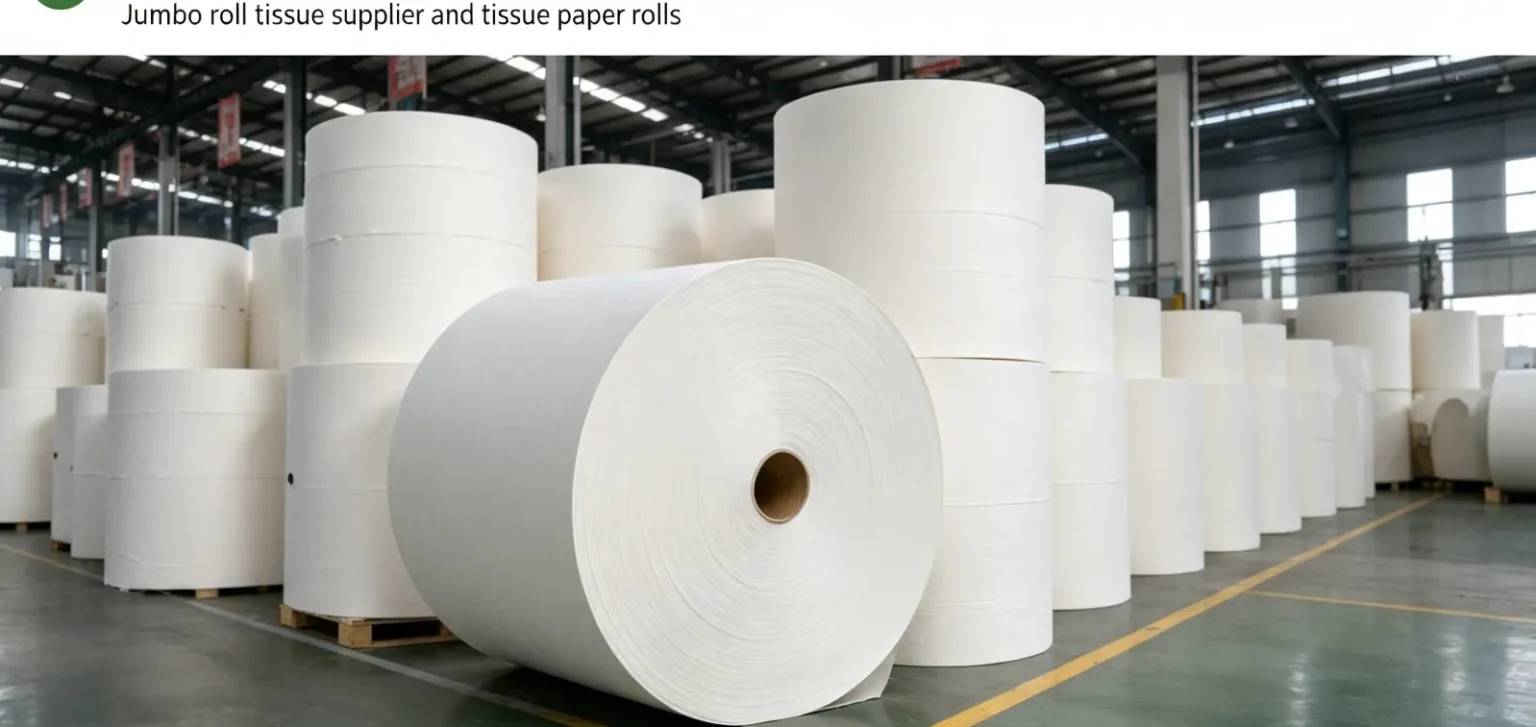
Choosing the right jumbo roll tissue supplier is an important decision for tissue converters, distributors, wholesalers, and hospitality suppliers. The right supplier can help you maintain consistent product quality, control purchasing costs, reduce production problems, and ensure reliable delivery.
However, comparing tissue suppliers based only on price can be risky. Two suppliers may offer similar-looking jumbo rolls while having significant differences in raw materials, basis weight, moisture, softness, strength, production consistency, packaging, and delivery performance.
To understand how to choose a tissue jumbo roll supplier, start with your converting requirements, then compare materials, quality control, capacity, total cost, and export support.
This guide covers the key factors buyers should evaluate before placing an order. For product basics, read What Is a Tissue Jumbo Roll?
1. Understand Your Jumbo Roll Tissue Requirements
Before contacting suppliers, clearly define what you need.
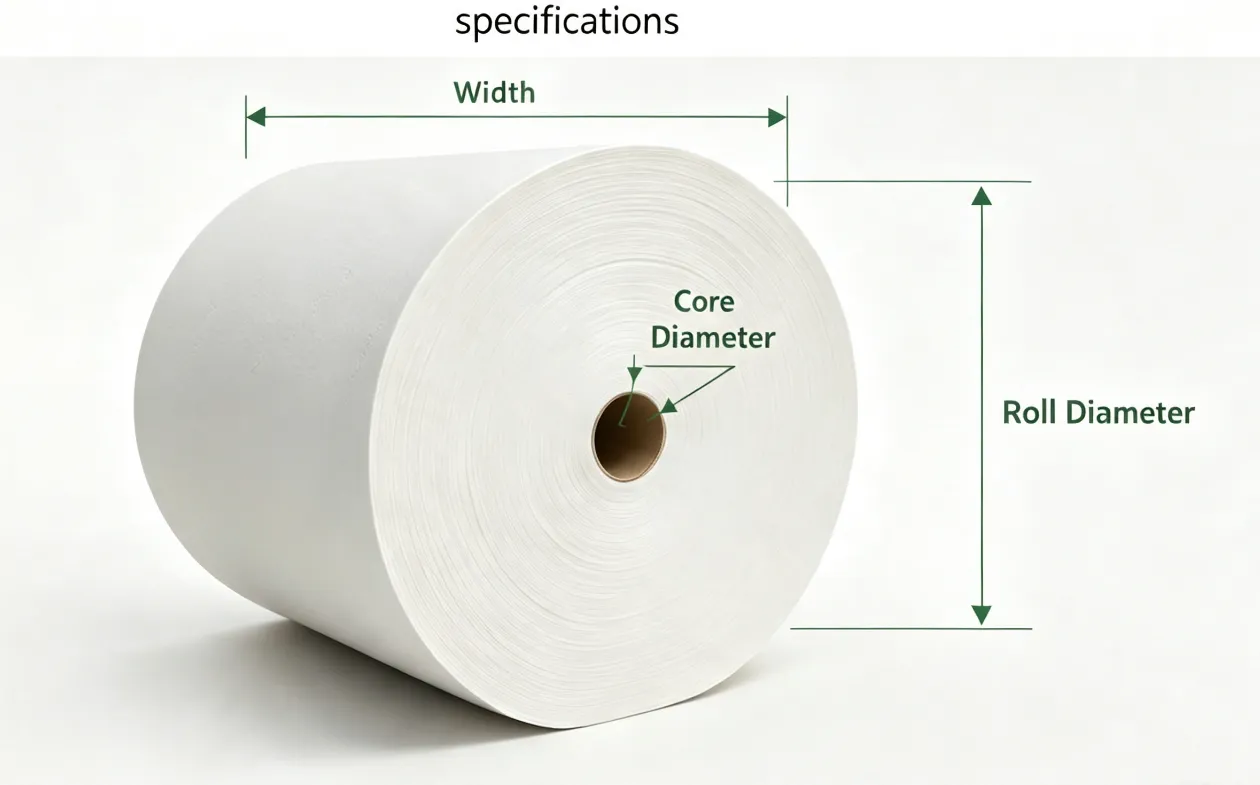
Jumbo roll tissue is available in different specifications depending on the final product and converting process. Your requirements may include:
- Tissue type
- Raw material
- Basis weight (GSM)
- Number of plies
- Roll width
- Roll diameter
- Core diameter
- Embossing requirements
- Color and appearance
- Dry and wet strength
- Softness
- Packaging
- MOQ
- Destination market
For example, a jumbo roll intended for facial tissue may require a different combination of softness, strength, and GSM from a jumbo roll used for toilet tissue or kitchen towels.
Having clear specifications before requesting quotations makes it much easier to compare different suppliers accurately.
2. Check the Raw Materials
Raw material is one of the most important factors affecting jumbo roll tissue quality.
Common raw materials include:
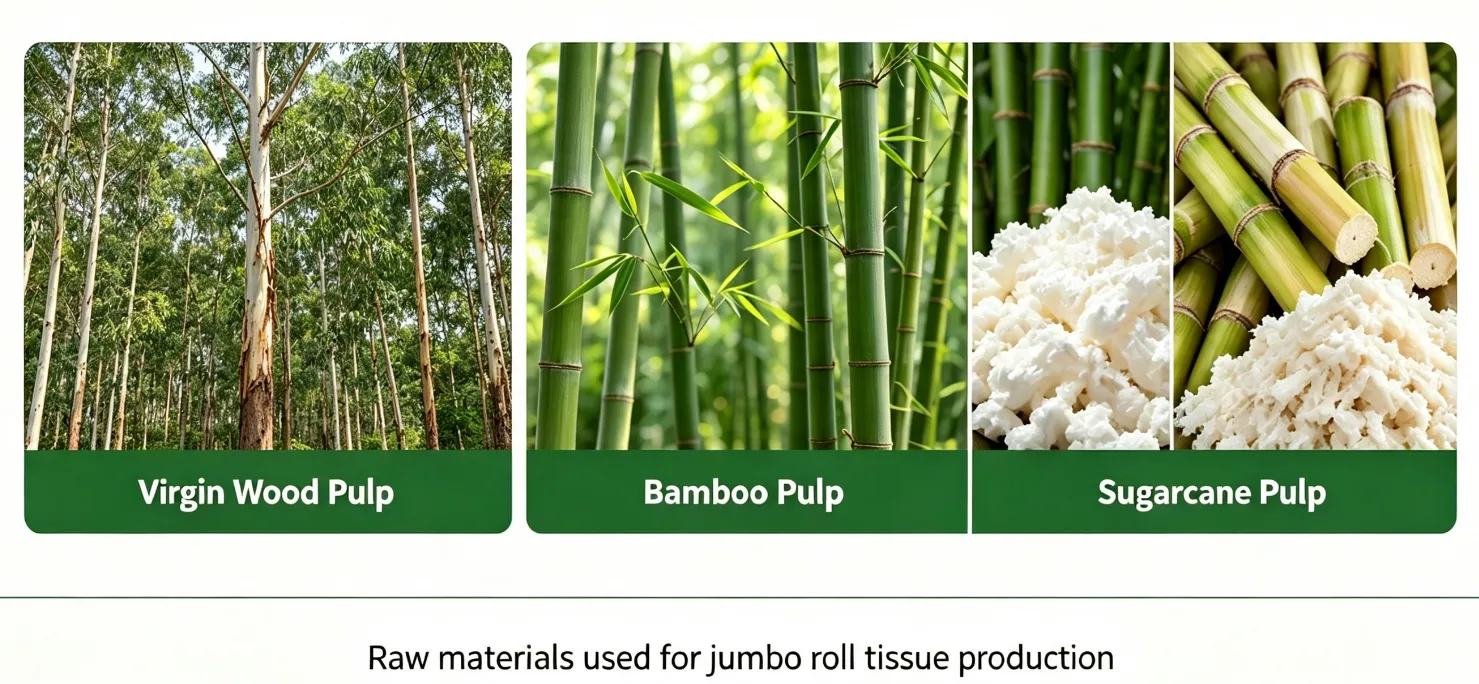
- Virgin wood pulp
- Bamboo pulp
- Sugarcane pulp
- Recycled fiber
- Blended fibers
Different materials provide different characteristics.
Virgin wood pulp is widely used for applications where softness, strength, and consistent quality are important.
Bamboo pulp can be an attractive option for buyers looking for alternative fiber sources and specific sustainability positioning.
Sugarcane pulp, also known as bagasse pulp, is another alternative fiber that can be used in tissue products depending on the required performance.
When evaluating a supplier, don’t simply ask what raw material they use. Ask for specific information about the material and whether it remains consistent from shipment to shipment.
A reliable supplier should be able to clearly explain the raw material used for each product specification.
3. Evaluate Tissue Quality and Consistency
Quality is not only about whether one sample looks good.
For converters, consistency between batches is often more important than the quality of a single sample.
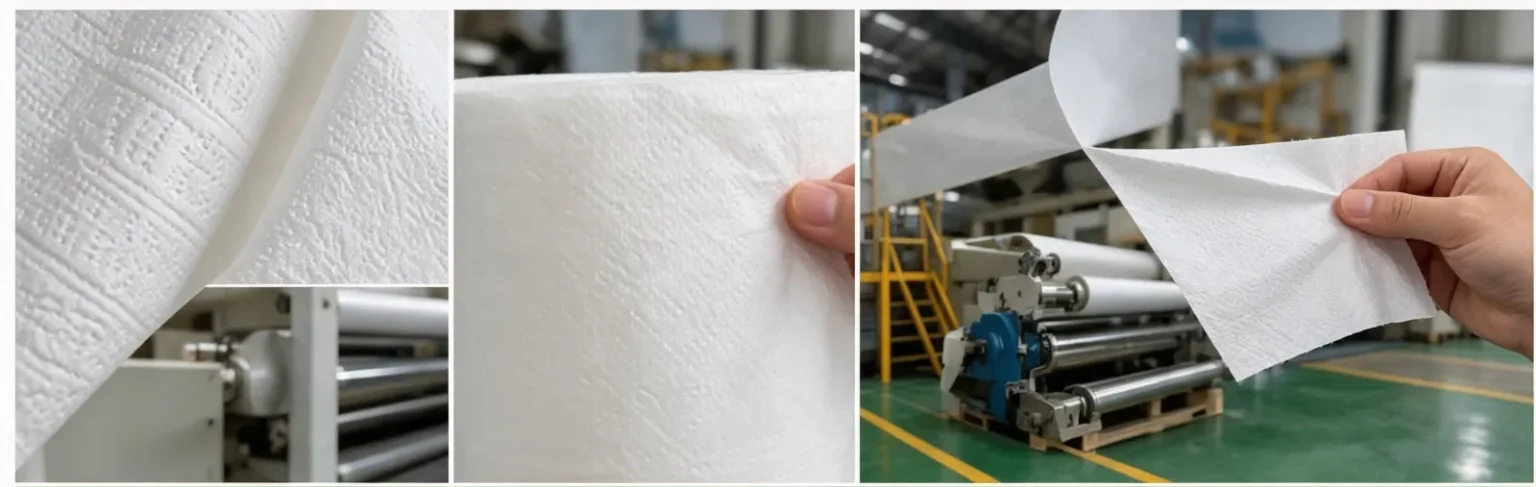
A jumbo roll supplier should be able to maintain relatively stable:
- GSM
- Moisture
- Bulk
- Tensile strength
- Softness
- Absorbency
- Roll dimensions
- Appearance
Inconsistent jumbo rolls can create problems during converting, including web breaks, machine adjustments, uneven embossing, excessive waste, and inconsistent finished products.
Before placing a large order, request samples and, whenever possible, test them on your own converting equipment.
This gives you a much better understanding of how the tissue performs in real production conditions.
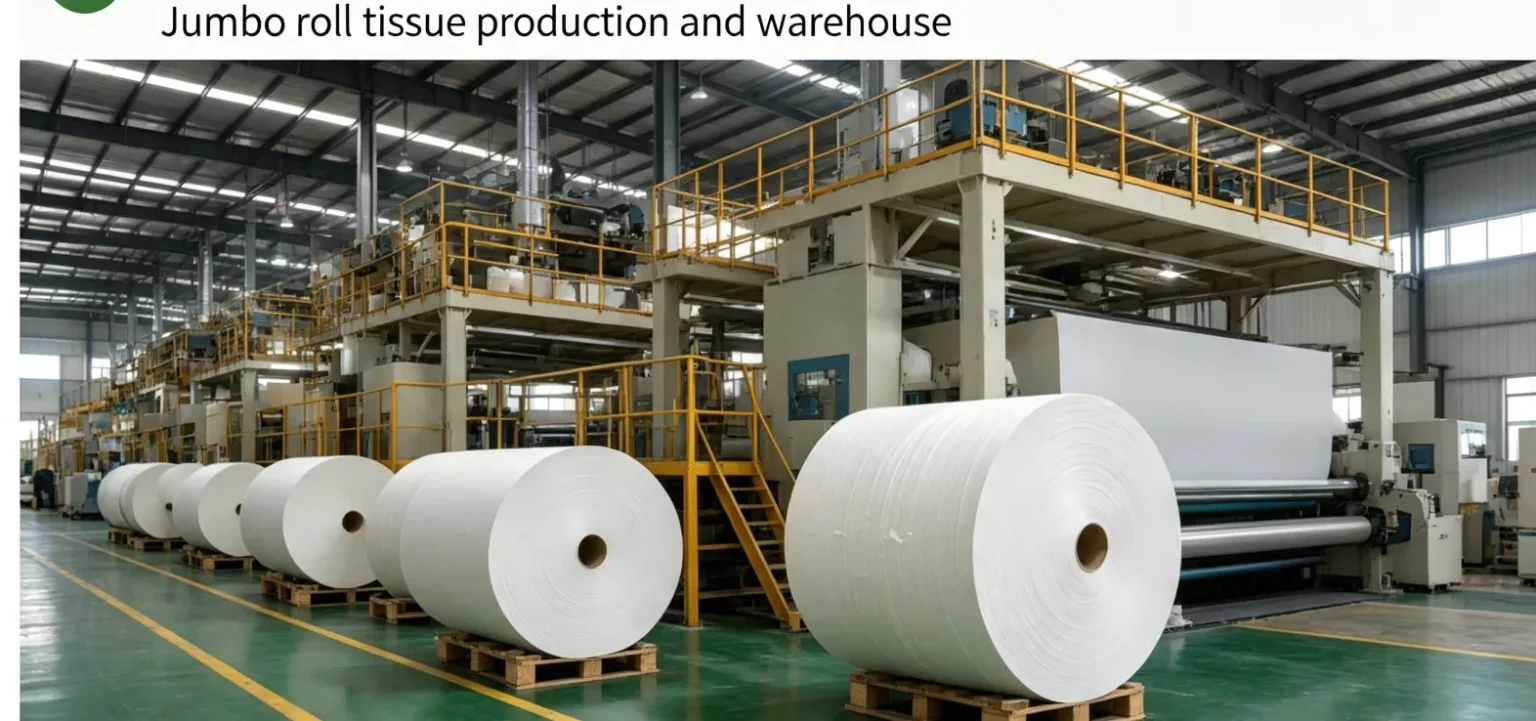
4. Ask About Production Capacity
A supplier may provide excellent samples but still be unable to support your regular purchasing volume.
For this reason, production capacity should be part of your supplier evaluation.
Ask questions such as:
- What is your monthly production capacity?
- How many jumbo rolls can you supply per month?
- What is your typical lead time?
- Can you support repeat orders?
- How do you handle peak-season demand?
- How much notice do you need for large orders?
This is especially important for distributors and converters who depend on stable tissue supply.
A supplier should not only be able to fulfill your first order. They should also have the supply capability to support your business as your purchasing volume grows. If you are looking for a supplier that can support both regular and customized tissue requirements, see our Tissue Jumbo Rolls range.
5. Check the Supplier’s Quality Control System
A professional jumbo roll tissue supplier should have a defined quality control process.
Depending on the product and market, quality control may cover:
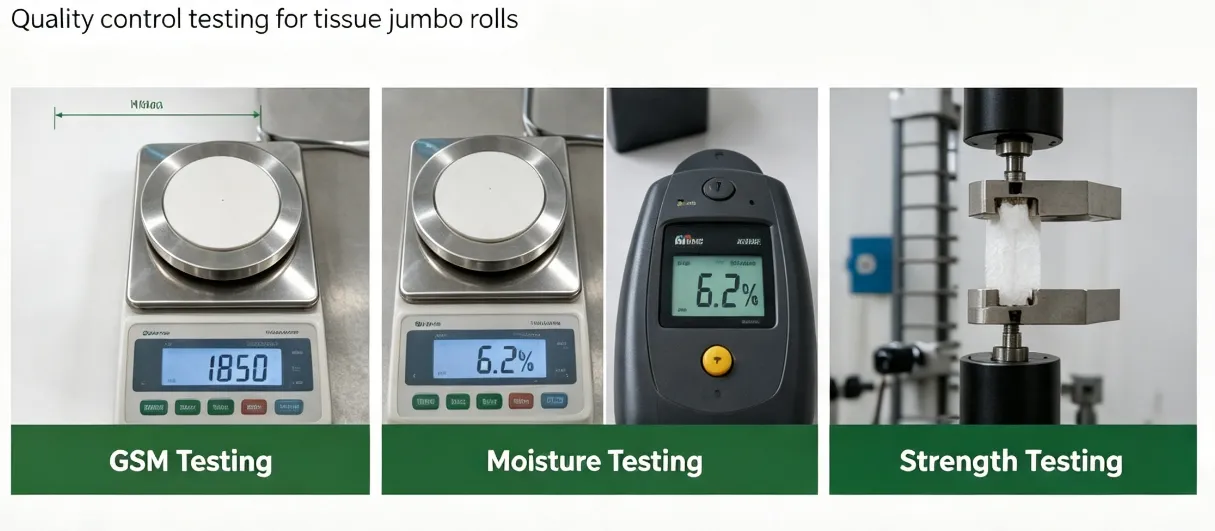
- Incoming raw materials
- Production parameters
- GSM
- Moisture
- Strength
- Roll dimensions
- Packaging
- Finished product inspection
- Loading inspection
Ask the supplier what quality checks are performed before shipment.
It is also useful to ask whether they can provide documents such as:
- Product specifications
- Certificate of Analysis (COA)
- Test reports
- Inspection reports
- Relevant certifications
The goal is not simply to collect certificates. The goal is to understand whether the supplier has a repeatable system for maintaining product quality.
6. Look at Certifications and Compliance
Depending on your target market and end-use application, certifications may be important.
For example, buyers may need documentation related to:
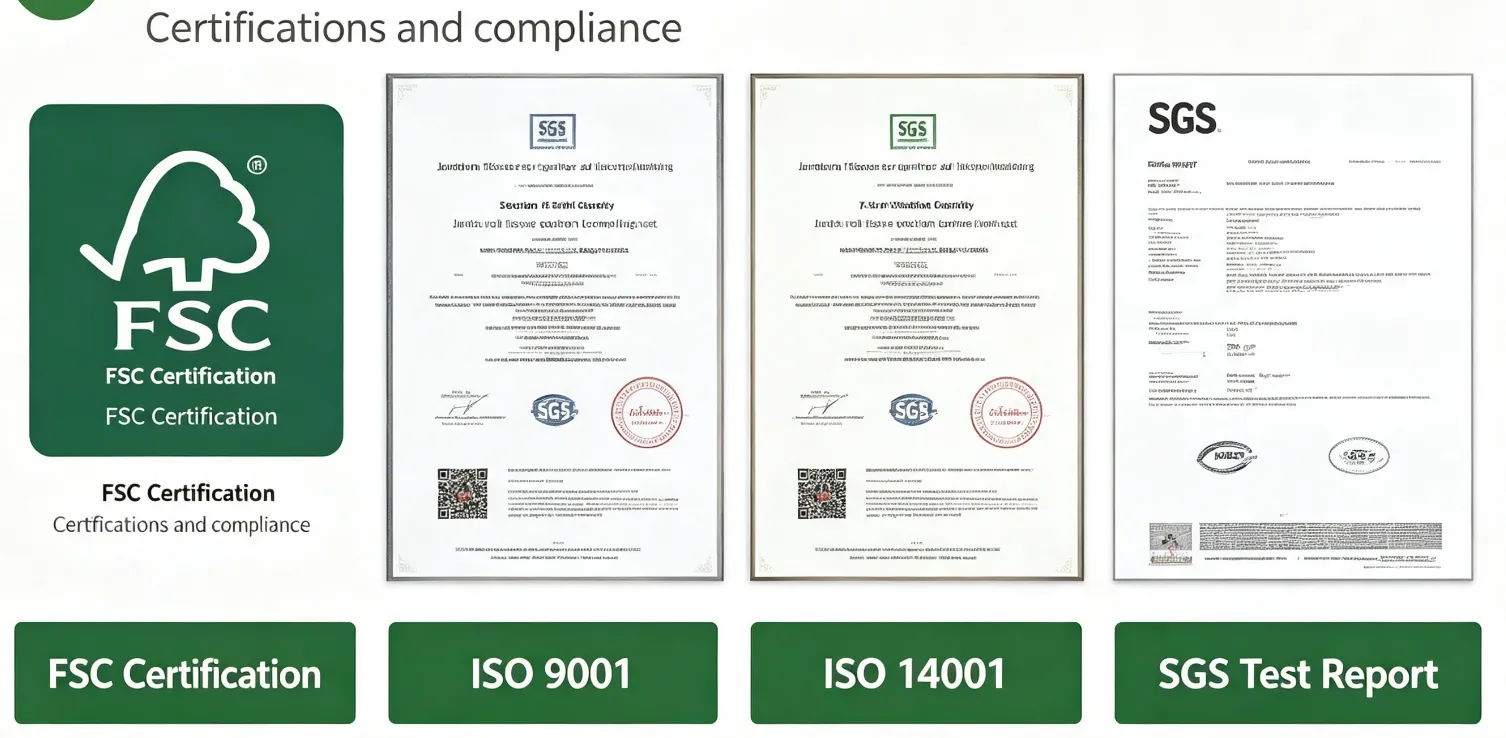
- FSC
- ISO
- Food-contact requirements
- Product safety
- Environmental standards
- Third-party testing
Not every tissue product requires the same certifications, so you should identify the requirements of your market before choosing a supplier.
If a supplier claims that a product is certified, ask for the relevant certification or supporting documentation.
A transparent supplier should be able to explain exactly which products or manufacturing facilities are covered by each certification.
7. Compare Pricing Carefully
Price is important, but the lowest quotation is not necessarily the lowest total cost.
When comparing jumbo roll tissue suppliers, consider the complete purchasing cost.
This may include:
Product price + packaging + transportation + import costs + production losses + quality-related costs
For example, a cheaper jumbo roll may become more expensive if it causes:
- More machine downtime
- Higher converting waste
- More web breaks
- Inconsistent finished products
- Additional quality inspections
- Delivery delays
Instead of asking only:
“What is your price per ton?”
also ask:
“What am I getting for that price?”
A good supplier should provide a clear quotation based on the same specifications so that you can make a fair comparison.
8. Check MOQ and Flexible Customization
Minimum order quantity is another important consideration.
Different buyers have different purchasing needs.
A large tissue converter may require container-scale orders, while a smaller distributor may need a lower MOQ for market testing.
Ask suppliers about:
- Minimum order quantity
- Mixed specifications
- Mixed containers
- Custom GSM
- Custom width
- Custom core size
- OEM packaging
- Private label options
Flexible suppliers can be particularly valuable when you are developing new products or entering a new market.
9. Evaluate Packaging and Container Loading
Jumbo rolls are sensitive to moisture, contamination, and handling damage.
Proper packaging is therefore an important part of product quality.
Ask how the jumbo rolls are protected during:
- Factory storage
- Transportation
- Container loading
- Ocean shipping
- Unloading at destination
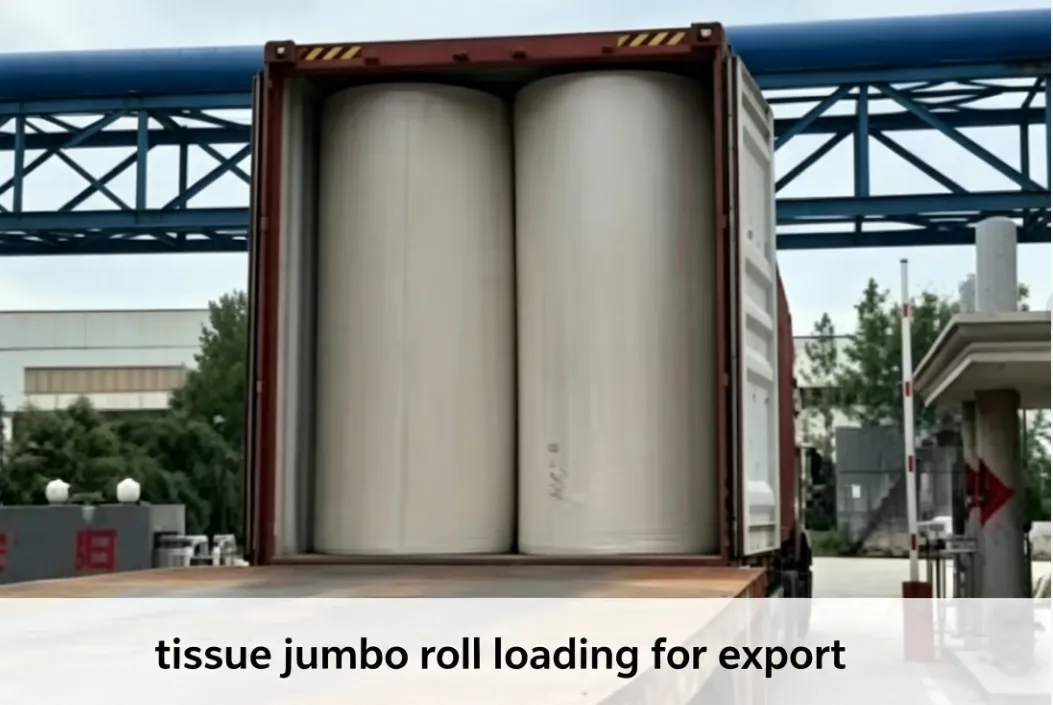
You should also consider container utilization.
A supplier with good loading experience may be able to optimize the number of rolls loaded per container while maintaining appropriate protection.
This can have a meaningful impact on your landed cost.
10. Consider Delivery Reliability
A good product at the wrong time can still create problems.
For converters and distributors, supply continuity is often critical.
When evaluating a supplier, look at:
- Production lead time
- Order confirmation process
- Shipping schedule
- Export experience
- Container loading procedures
- Communication during delays
- Ability to handle repeat orders
Ask the supplier for a realistic lead time rather than simply accepting the fastest possible estimate.
It is better to work with a supplier that consistently delivers within an agreed timeframe than one that promises extremely short lead times but frequently delays shipments.
11. Check Export Experience
International tissue paper trade involves more than manufacturing.
An experienced export supplier should understand:
- Export documentation
- Container loading
- Shipping arrangements
- Commercial invoices
- Packing lists
- Certificates of origin
- Destination-market requirements
- Communication with overseas buyers
If you are importing jumbo roll tissue for the first time, working with a supplier experienced in international shipments can make the purchasing process much smoother.
You can also ask which markets the supplier regularly serves.
Experience in your target market can be an advantage because the supplier may already understand common specifications, documentation, and packaging requirements.
12. Test Communication Before Placing a Large Order
Communication is often overlooked during supplier selection.
However, your first inquiry can tell you a lot about how a supplier works.
Pay attention to whether the supplier:
- Responds within a reasonable timeframe
- Understands your specifications
- Answers questions directly
- Provides complete product information
- Explains pricing clearly
- Follows up professionally
- Can communicate effectively in English
If communication is difficult before the order, it may become even more difficult when you have an urgent production or shipping issue.
A reliable supplier should be easy to communicate with and willing to provide clear information.
13. Request Samples Before a Large Order
Never choose a jumbo roll tissue supplier based only on a quotation.
Samples allow you to evaluate the actual product.
Ideally, test the samples for:
- GSM
- Thickness or bulk
- Softness
- Strength
- Absorbency
- Moisture
- Appearance
- Roll dimensions
- Converting performance
If possible, run the sample through your own converting machine.
This is one of the most effective ways to determine whether a supplier’s tissue is suitable for your production process.
14. Compare Suppliers Using the Same Specifications
One common purchasing mistake is comparing quotations that are not based on identical specifications.
For example:
Supplier A: 18 GSM virgin pulp tissue
Supplier B: 18 GSM blended pulp tissue
These products may have completely different production costs and performance.
When requesting quotations, provide the same specifications to every supplier.
A useful RFQ should include:
| Specification | Example |
|---|---|
| Product | Tissue Jumbo Roll |
| Application | Toilet Tissue |
| Raw Material | Virgin Wood Pulp |
| GSM | 16–18 GSM |
| Ply | 1 Ply |
| Width | Customized |
| Core | Customized |
| Roll Diameter | Customized |
| Packaging | Export Standard |
| Quantity | 1 × 40HQ |
| Destination | Customer Port |
This makes supplier comparison much more meaningful.
15. Look for a Long-Term Supply Partner
The best supplier is not necessarily the supplier offering the lowest price on your first order.
For many businesses, the better choice is a supplier who can provide:
Consistent Quality + Competitive Cost + Reliable Supply + Clear Communication + Flexible Service
A long-term supplier relationship can make purchasing easier over time.
Once the supplier understands your specifications and production requirements, repeat orders can become faster and more consistent.
Supplier Evaluation Table
Use the same written specifications and evidence requests for every supplier you compare.
| Evaluation area | Evidence to request | What to compare |
|---|---|---|
| Materials and specifications | Fiber composition and written GSM, ply, width, roll diameter, core size, and strength requirements | Fit with the finished product and converting equipment |
| Quality and consistency | Same-spec samples, batch test data, and quality-control checks | GSM, moisture, strength, softness, absorbency, winding, and runability across batches |
| Capacity and delivery | Monthly output, typical lead time, and repeat-order plan | Ability to meet required volume and delivery dates |
| Pricing and flexibility | Itemized quote, MOQ, customization, packing, and shipping terms | Landed cost and expected converting losses for identical specifications |
| Export support | Applicable certificates, sample invoice and packing list, and loading plan | Documentation accuracy, roll protection, and communication |
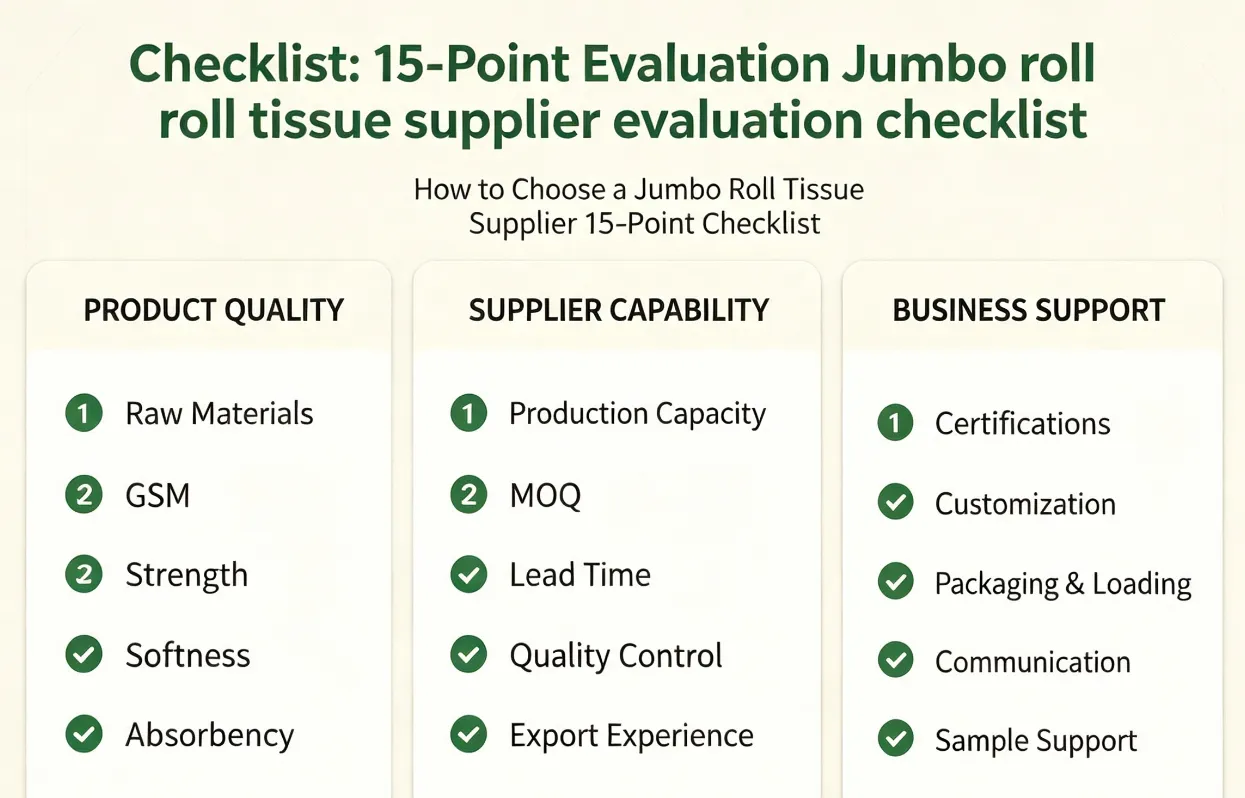
A Simple Jumbo Roll Tissue Supplier Evaluation Checklist
Before choosing a supplier, ask yourself:
- Does the supplier understand my application?
- Are the raw materials clearly specified?
- Can they provide stable product quality?
- Can they meet my required volume?
- Do they have an effective quality control system?
- Can they provide relevant certifications and documents?
- Is the MOQ suitable for my business?
- Can they provide customized specifications?
- Is their packaging suitable for international shipping?
- Do they have export experience?
- Is their lead time realistic?
- Can they provide samples?
- Can the product run reliably on my converting equipment?
- Is communication clear and professional?
- Can they support long-term supply?
If the answer to most of these questions is yes, you are likely looking at a supplier worth further evaluation.
Final Thoughts
Choosing a jumbo roll tissue supplier should be based on more than price.
For converters, distributors, wholesalers, and hospitality suppliers, the right supplier should be able to provide consistent quality, reliable supply, suitable specifications, competitive total cost, and professional export support.
Before placing a large order, compare suppliers using the same specifications, request samples, evaluate product performance, check relevant certifications, and communicate your long-term requirements clearly.
The goal is not simply to find the cheapest jumbo roll tissue.
The goal is to find a supplier that can help you maintain stable production, predictable costs, and reliable supply over the long term.
Frequently Asked Questions
What specifications should I send a tissue jumbo roll supplier?
Send the intended application, fiber material, GSM, ply, roll width, roll diameter, core size, strength or softness targets, packaging, order volume, and destination. Include your converting-machine requirements when available so suppliers quote the same product.
How can I verify a supplier’s quality before a bulk order?
Request a same-spec sample and relevant batch test or inspection records. Check GSM, moisture, strength, softness, roll dimensions, and winding, then run the sample on your converting equipment where possible.
Is the lowest price per ton the best offer?
Not always. Compare quotes based on identical specifications and include packaging, freight, import costs, converting waste, downtime, and quality-related losses in the total cost.
What should I ask about production capacity and delivery?
Ask for monthly supply capacity, typical lead time, repeat-order capability, peak-season planning, and how the supplier communicates schedule changes. Confirm these points against your required order volume and delivery dates.
Which documents should an export supplier provide?
Ask which product specification, test or inspection report, commercial invoice, packing list, certificate of origin, and market-specific documents apply to your order. Confirm requirements for your destination and product use before shipment.
Looking for a Reliable Jumbo Roll Tissue Supplier?
At Senjoy Paper, we supply tissue jumbo rolls and finished tissue products for distributors, converters, wholesalers, and hospitality markets.
Our product range includes different tissue grades and raw material options, with specifications that can be customized according to your converting requirements.
Whether you are sourcing toilet tissue jumbo rolls, facial tissue jumbo rolls, kitchen towel jumbo rolls, hand towel jumbo rolls, or napkin tissue, we can discuss your requirements and recommend a suitable specification.
Send us your requirements, target specifications, and estimated order volume to get started through our Contact page.