
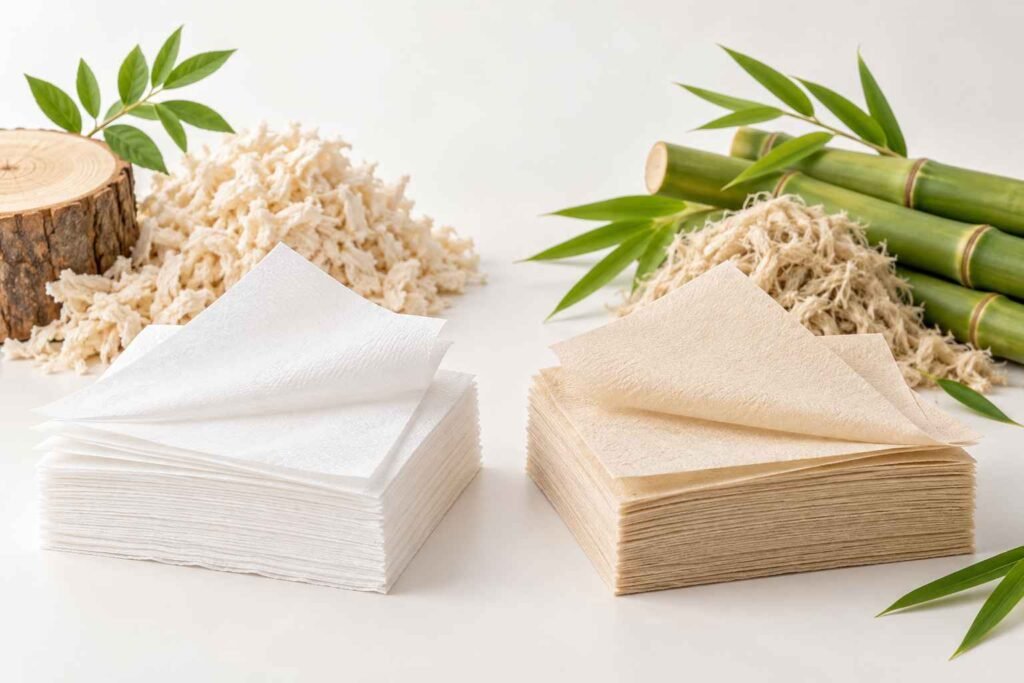
When choosing tissue paper products or jumbo rolls, the raw material is one of the most important factors affecting softness, strength, appearance, price, and market positioning. Two common premium options are virgin wood pulp and virgin bamboo pulp. Although both can produce high-quality tissue, they have different characteristics and suit different business needs.
This guide compares virgin wood pulp vs bamboo pulp tissue to help tissue converters, distributors, importers, and private label brands select the right material for their products. For buyers evaluating roll stock, Senjoy Paper also supplies facial tissue jumbo rolls for converting and private-label production.
What Is Virgin Wood Pulp Tissue?
Virgin wood pulp tissue is made from cellulose fibers obtained directly from softwood or hardwood rather than recovered paper. Because the fibers have not previously been recycled, they generally retain good length, cleanliness, and bonding ability.
Softwood fibers are relatively long and contribute strength, while hardwood fibers are shorter and help improve softness and surface smoothness. Tissue manufacturers often blend the two to achieve the required balance.
Virgin wood pulp is widely used for toilet paper, facial tissue, paper napkins, kitchen towels, and hand towels. Its bright white appearance, consistent quality, and familiar hand feel make it a common choice for mainstream and premium tissue products.
What Is Bamboo Pulp Tissue?
Bamboo pulp tissue is manufactured from cellulose extracted from bamboo. Bamboo is a fast-growing plant that can regenerate after harvesting, making it an increasingly popular alternative fiber source.
Depending on the production process, bamboo tissue paper may be bleached white or retain a natural light-brown color. Natural bamboo tissue is often positioned as an environmentally conscious product, while white bamboo tissue can be used for buyers who want bamboo-based material with a more conventional appearance.
Bamboo pulp tissue paper can be converted into toilet rolls, facial tissues, napkins, kitchen towels, hand towels, and tissue jumbo rolls. It is especially suitable for brands seeking natural materials or differentiated product stories, including natural bamboo napkin tissue jumbo rolls for napkin converters.
Virgin Wood Pulp vs Bamboo Pulp Tissue: Main Differences
| Factor | Virgin Wood Pulp Tissue | Bamboo Pulp Tissue |
|---|---|---|
| Hand feel | Very soft, familiar premium touch | Soft with a slightly firmer natural feel |
| Appearance | Bright white and highly consistent | White or natural light-brown options |
| Strength | Adjustable through hardwood and softwood blends | Good tensile strength and absorbency when properly processed |
| Brand positioning | Mainstream, premium, hygiene-focused markets | Natural, renewable, sustainability-focused products |
| Supply and cost | Mature supply chain with broad availability | May carry a premium depending on pulp source and certification |
| Best-fit products | Facial tissue, toilet paper, napkins, towels, jumbo rolls | Bamboo toilet tissue, napkins, facial tissue, kitchen and hand towels |
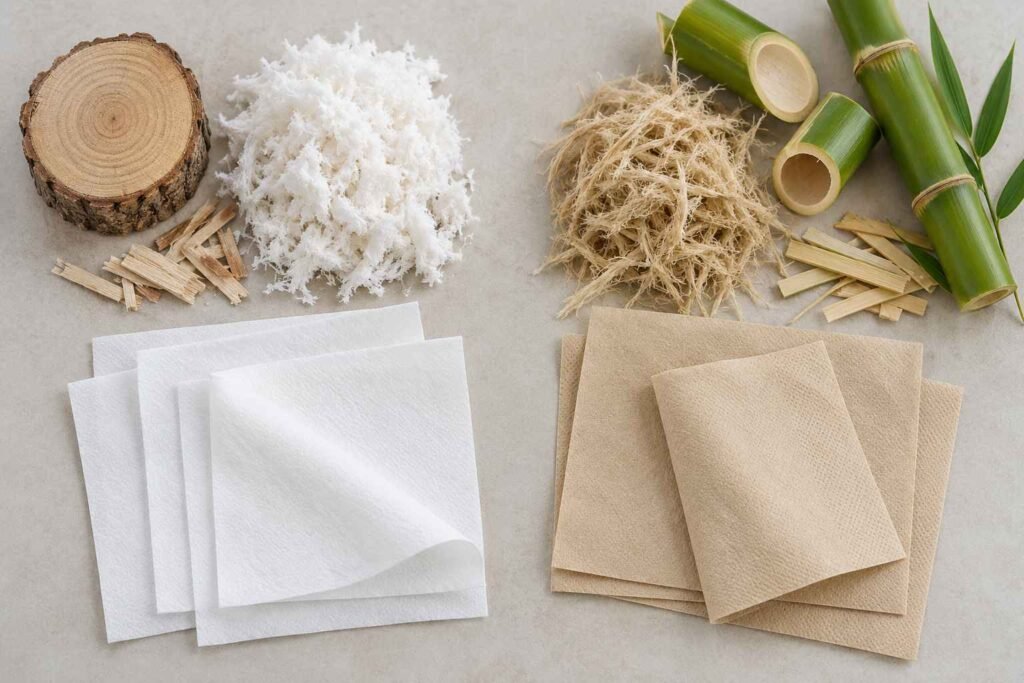
1. Softness and Hand Feel
Virgin wood pulp tissue is commonly known for excellent softness, particularly when the fiber blend and tissue-making process are properly controlled. This makes it especially attractive for facial tissue, premium toilet paper, and other products used directly on the skin.
Bamboo pulp tissue can also be soft and comfortable, but its texture may feel slightly firmer or more substantial depending on the pulp quality, GSM, embossing, and converting process. Material alone does not determine softness; creping, refining, ply combination, and lotion treatment also have a major influence.
For buyers, physical samples are more reliable than judging quality only from the stated pulp type.
2. Strength and Absorbency
Both materials can provide good strength and absorbency. Virgin wood pulp allows manufacturers to adjust the hardwood and softwood ratio for different performance targets. For example, kitchen towels and hand towels normally require more wet strength than facial tissue.
Bamboo fibers can provide good tensile strength and absorbency, making bamboo suitable for napkins, toilet tissue, and towel products. Actual performance should be evaluated through specifications such as dry tensile strength, wet tensile strength, water absorption, and disintegration—not through material claims alone.
3. Color and Appearance
Virgin wood pulp tissue is typically bright white, clean, and visually consistent. It is therefore widely preferred in markets where whiteness is associated with hygiene or premium quality.
Bamboo tissue is available in both white and natural brown. Natural bamboo pulp tissue offers a recognizable, unbleached-style appearance that helps brands stand out on retail shelves. However, its natural color may vary slightly between production batches, so buyers should establish an approved color standard before mass production.
Both wood pulp and bamboo pulp can also be dyed for customized colored tissue products, subject to the manufacturer’s capabilities and applicable safety requirements.
4. Sustainability Considerations
Bamboo grows rapidly and can regenerate without replanting, which gives it a strong sustainability story. This is one reason bamboo tissue has become popular with environmentally focused consumers and private label brands.
However, the environmental impact of tissue paper raw materials should not be judged by fiber source alone. Forestry or agricultural management, pulp production, chemical use, energy consumption, transportation distance, packaging, and wastewater treatment all matter.
Responsibly sourced virgin wood pulp can also be a sustainable option when supported by credible chain-of-custody certification. Buyers should request relevant documentation instead of relying only on words such as “eco-friendly” or “green.” FSC-certified options may be available for both wood and bamboo fiber, depending on the supply chain.
5. Price and Supply
Virgin wood pulp has a mature global supply chain and broad market acceptance. Pricing still changes with global pulp costs, exchange rates, energy prices, and logistics, but sourcing options are generally extensive.
Bamboo pulp tissue may carry a price premium in some markets because of pulp availability, production volume, certification requirements, and brand positioning. In regions close to bamboo resources and established bamboo pulping capacity, the difference may be smaller.
Importers should compare the total landed cost rather than only the price per ton. GSM, roll diameter, container loading, packaging, freight, import duties, converting efficiency, and production waste can materially affect the final cost.
Which Material Is Better for Each Application?
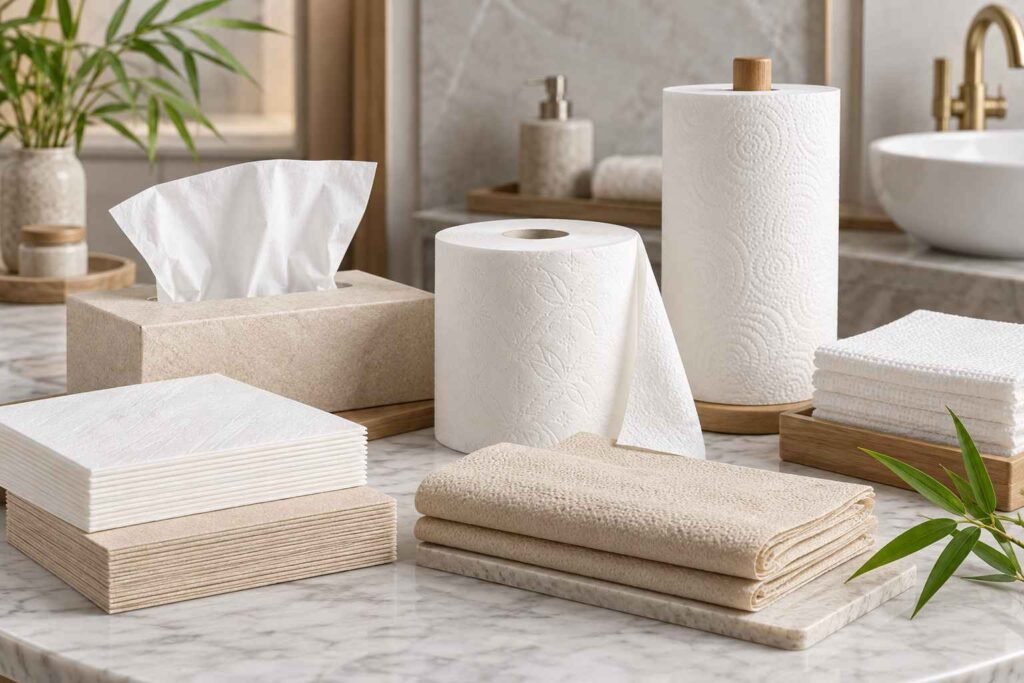
There is no universal winner in the bamboo tissue vs regular tissue comparison. The better choice depends on product positioning and performance requirements.
- Facial tissue: Virgin wood pulp is often selected for maximum softness and a bright white appearance. Bamboo pulp offers a differentiated natural-material option.
- Toilet paper: Both materials work well. Wood pulp suits conventional premium products, while bamboo can support natural or sustainability-focused branding such as natural bamboo toilet tissue jumbo rolls.
- Paper napkins: Both can provide good printing, embossing, strength, and absorbency. Color, food-contact requirements, folding size, and GSM may be more important than the fiber source.
- Kitchen and hand towels: Evaluate wet strength and absorbency through testing. Either pulp can work when the paper structure is correctly designed; bamboo-focused buyers can review natural bamboo kitchen towel jumbo rolls.
- Colored tissue jumbo rolls: Choose a supplier with stable pulp preparation and color-control experience. Shade consistency and converting performance are critical.
What Buyers Should Check Before Ordering
Before purchasing virgin wood pulp or bamboo tissue jumbo rolls, confirm the following details with the supplier:
- Pulp composition and supporting declaration
- GSM and acceptable tolerance
- Ply, width, roll diameter, and core size
- Whiteness or approved color standard
- Tensile strength and absorbency requirements
- Food-contact suitability when relevant
- FSC or other requested certification scope
- Packaging, loading quantity, MOQ, and lead time
- Sample availability and trial-roll procedure
If a supplier claims the product is 100% bamboo pulp or 100% virgin wood pulp, request a written material declaration and relevant test information. Laboratory fiber analysis may help identify major fiber types, although proving an exact commercial claim can require multiple forms of supply-chain evidence.
Final Recommendation
Choose virgin wood pulp tissue when your priority is familiar premium softness, high whiteness, consistent appearance, and wide market acceptance. Choose bamboo pulp tissue when you want a renewable fiber story, a natural-brown option, or stronger product differentiation.
The best decision should combine material selection with product testing, certification review, converting performance, landed cost, and target-market expectations.
Senjoy Paper supplies virgin wood pulp and bamboo pulp tissue jumbo rolls and finished tissue products for global converters, distributors, and private label brands. Specifications including GSM, width, roll diameter, core size, color, embossing, and packaging can be customized. Contact us to request samples or discuss the right tissue paper solution for your market.
FAQ
Is bamboo pulp tissue better than virgin wood pulp tissue?
Not always. Bamboo pulp tissue is a strong option for renewable-material positioning, while virgin wood pulp tissue is often preferred for bright whiteness, familiar softness, and broad market acceptance. The better choice depends on product use, target market, certification needs, and tested performance.
Is bamboo tissue paper soft enough for facial tissue and toilet paper?
Yes, bamboo tissue paper can be soft enough for facial tissue and toilet paper when pulp quality, GSM, ply, creping, embossing, and converting are well controlled. Buyers should confirm softness with physical samples before placing bulk orders.
Can both wood pulp and bamboo pulp tissue be FSC certified?
FSC-certified options may be available for both virgin wood pulp and bamboo pulp tissue, depending on the supply chain. Buyers should request current certificate details, product scope, and transaction documentation from the supplier.
What information should I provide when requesting samples or a quote?
Share the product type, pulp preference, GSM, ply, width, roll diameter, core size, color, embossing, packaging, certification needs, destination market, and estimated order quantity. Clear specifications help the supplier recommend suitable samples and accurate pricing.